Leo Gerard, International President of the United Steelworkers (USW) delivered this speech on May 18th in New York City at an event sponsored by the Central Labor Council and other progressive organizations.
Gerard's speech, is an important statement by the leader of America's largest industrial union.
A shortened version of the full speech was broadcast on the weekly radio show of AFSCME District Council 37 produced by Ken Nash on WNYE.
HR 676 has been endorsed by 141 union organizations including 24 central labor councils, two state AFL-CIO's (KY and PA), and two area labor federations.
Click here to hear the speech.
Sunday, May 28, 2006


Tuesday, May 23, 2006
Baucus Co-Sponsors Employee Free Choice Act
Sen. Max Baucus (D-Mont.) became the 43rd senator to sign on as a co-sponsor of the Employee Free Choice Act, eight short of a majority. There are 216 co-sponsors in the House, just two short of a majority. The most recent supporter in the House is Delegate Eni Faleomavaega (D) of American Samoa, who does not have a vote in floor actions.
The legislation (S. 842 and H.R. 1696) would require employers to recognize a union after a majority of workers signs cards authorizing representation. It also would provide for mediation and arbitration of first-contract disputes and set stronger penalties for violations of labor law when workers are trying to form a union.
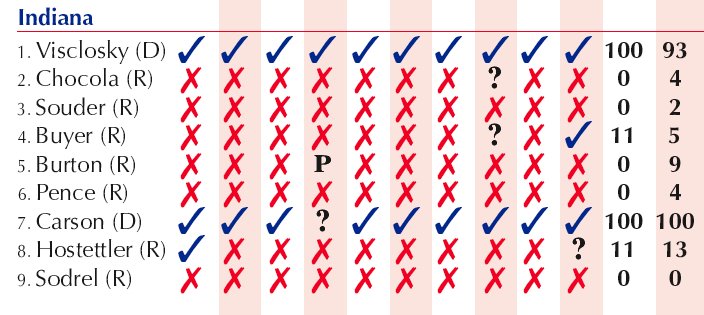
Indiana Congressman Chris Chocola has thus far failed to co-sponsor this legislation which is so important to workers.
You can see the full list of co-sponsors by clicking here:
The legislation (S. 842 and H.R. 1696) would require employers to recognize a union after a majority of workers signs cards authorizing representation. It also would provide for mediation and arbitration of first-contract disputes and set stronger penalties for violations of labor law when workers are trying to form a union.
Indiana Congressman Chris Chocola has thus far failed to co-sponsor this legislation which is so important to workers.
You can see the full list of co-sponsors by clicking here:
Tuesday, May 16, 2006
Nancy Dembowki for Indiana's Dist. 17 Representative

IT’S “TIME” TO ELECT DEMBOWSKI
Nancy Dembowski has deep roots in Indiana’s 17th House District. Her parents lived in Knox their entire lives and her grandfather was a County Assessor and the longest-serving Fire Chief in Knox history.Nancy was born and raised in Knox and has lived her entire life there. She graduated from Knox Community High School and married her husband Ed and they made the decision to stay in Knox and raise their family there. They have three children who live in Knox and eight grandchildren. Ed passed away in 1995. They have been married for 43 years.
While Ed worked as a union steelworker for 34 years, Nancy worked at W.K.V.I. Radio in Knox for 25 years. In 1984, Nancy was elected to the Starke County Council and received the highest number of votes among all county candidates. She was re-elected to serve on the County Council in 1988, again leading the county ticket. The County had a balanced budget all seven years Nancy served on the County Council. In 1990, Nancy received the Starke County Citizen of the Year Award. She served on the Council until 1991 when Nancy was elected Mayor of Knox. Nancy was re-elected to two additional terms and served a total of eleven years in the office of Mayor. She is one of the longest serving mayors in Knox history. As Mayor, Nancy led the effort to build the Knox Community Center and led the renovation of the Historic Gateway Depot. In addition, during her service as Mayor, the City of Knox received two prestigious Achievement Awards from the Indiana Association of Cities and Towns. Only four Indiana Cities receive these awards each year.
Nancy was elected to the Indiana Senate in December of 2002 by Democratic precinct committee people to fill the unexpired term of former Senator Bill Alexa. Nancy Dembowski is a member of St. Thomas Aquinas Church in Knox. She is also a member of the Starke County Economic Development Foundation, having served on that board since it first began and currently serves as its Vice President. She has served as Chairman of Starke United and President of the Starke County Junior Achievement board and the Chamber of Commerce. She is a past member of the Kiwanis Club and also served as a member of the Knox High School Improvement Plan Committee, the Harvest Festival Committee, and the Starke County Workforce One Advisory Board.
She recently became a member of the Starke County Community Foundation and is a former member of the Starke County Coalition Against Domestic Abuse where she helped institute a plan to build the Phoenix House, a safe haven for families escaping abuse. Nancy also founded the Candy Cane Committee, a group of volunteers who built and designed Christmas decorations for the City of Knox.
Monday, May 15, 2006
Post Turtle Bush
While the right wing approves a $70 billion tax cut package for their rich pals, they at the same time are preparing to tax seniors for the rest of their lives, if they fail to enroll in the confusing Medicare Rx Program.
While the top 1 percent of taxpayers will pocket an extra $82,000 a year, the middle 20 percent will only see an extra $20.
Down with education, health and child care and other vital programs for working families. A typical Republican agenda. Anything to cause misery and suffering to “the least of these”.
Out here in the country, Bush and his buddies are referred to as “post turtles”. Those are turtles you might see on the top of a fence post. They don’t know how they got up there, they don’t know what they’re doing there, and they don’t know how to get down.
It’s up to all of us to help them get down.
While the top 1 percent of taxpayers will pocket an extra $82,000 a year, the middle 20 percent will only see an extra $20.
Down with education, health and child care and other vital programs for working families. A typical Republican agenda. Anything to cause misery and suffering to “the least of these”.
Out here in the country, Bush and his buddies are referred to as “post turtles”. Those are turtles you might see on the top of a fence post. They don’t know how they got up there, they don’t know what they’re doing there, and they don’t know how to get down.
It’s up to all of us to help them get down.
Wednesday, May 03, 2006
Chocola No Friend of Retirees
Alliance for Retired Americans Congressional Voting Record
109th Congress, 1st Session
January 2005—December 2005
109th Congress, 1st Session
January 2005—December 2005
This past year we saw Congress once again enact legislation that worsened the nation’s budget and fiscal crisis at the expense of retirees and older Americans. In the face of the largest deficits in the nation’s history, Congress deepened the crisis and favored only the wealthiest Americans with tax cuts. In addition, even before the Medicare Part D prescription drug program went into effect, its many flaws quickly became evident. Yet Congress did nothing.
Budget and fiscal policies dominated debate in Congress during 2005. It took Congress thirteen months to enact a budget. The result was decidedly anti-retiree. Changes in the Medicaid program now mean that states can force higher premiums, deductibles, and co-payments upon seniors in the program. Hospitals and pharmacists can refuse service if a patient cannot pay. This is a sad state of affairs for the most vulnerable in our society.
The Medicare Part D prescription drug program, coming on the heels of the disastrous discount card program, caused great confusion among seniors and their families, even before it took effect. Congress had several opportunities to make senior-friendly changes such as allow the Medicare program to negotiate for lower drug prices, extend the enrollment period without penalty, and lower rebates to drug manufacturers. But it did not act. Now seniors are faced with a bewildering program that favors drug and insurance companies at the expense of older Americans.
Social Security privatization was the one major issue for retirees and their families on which Congress did not vote. Halting privatization before a vote was due largely to the grassroots efforts of Alliance members throughout the country. We let Congress and the White House know that Social Security privatization was unacceptable. President Bush made Social Security privatization the hallmark of his second term, highlighting it during his January 2005 State of the Union Address. He crisscrossed the nation promoting it. Dozens of key members of Congress lined up to support it. In the end, the good sense of the American people of all ages prevailed. Social Security, which lifts nearly half of older Americans out of poverty, is the most successful program in our nation’s history. At a time when the baby boomer generation nears retirement, the creation of private accounts under Social Security would not only threaten the economic security of millions of retired and disabled Americans and their families, it would also add trillions of dollars in additional national debt. Stopping Social Security privatization was one great victory in an otherwise disappointing year.
This Voting Record reflects how committed our elected representatives are to retirees and older Americans. Use it to educate yourself on where your elected representatives stand. Get active today and help create an America that protects the health and economic security of seniors, strengthens families and builds safe and thriving communities.
George J. Kourpias, President - Ruben Burks, Secretary-Treasurer - Edward F. Coyle, Executive Director
The following is a list of ten key votes selected as representative of the votes
of critical importance to retirees taken by the U.S. House of Representatives:
How to read this record:
Democrat (D) Republican (R) Independent (I)
Check mark= Voted With Alliance Policy
X=Voted Against Alliance Policy
S= Speaker Did Not Vote
P= Present
?= Did Not Vote
O= Not Eligible Member
+= Announced For
_= Announced Against
AL= At-Large
The number before each name indicated Congressional District.
100%= Best Score Possible
1. Anti-Retiree Budget I
The House passed the annual budget resolution for fiscal
year 2006. The resolution sets spending and revenue guidelines.
The budget cuts domestic spending programs by $68.6
billion over five years and includes $106 billion in tax
cuts that help only the wealthiest Americans. This fiscal policy
threatens the financial stability of the Social Security
and Medicare Trust Funds. The resolution passed 218-214.
A NO vote is the pro-retiree vote. H. Con. Res. 95, Roll Call
No. 88, March 17, 2005.
2. Skewed Estate Taxes
This bill, introduced by Representative Hulshof, R-MO, would
permanently extend the repeal of the federal estate and gift
tax, which is set to expire beginning in 2010. The repeal benefits
only the wealthiest Americans, threatens the Social Security
and Medicare trust funds, and impedes funding of a
comprehensive Medicare prescription drug benefit program.
The bill passed the House 272-162. A NO vote is the proretiree
vote. H.R. 8, Roll Call No. 102, April 13, 2005.
3. Pension Protections
Rep. Miller, D-CA, introduced an amendment to the Labor
Department’s funding bill that would prohibit the Pension
Benefit Guaranty Corporation from using funds to take over
four United Airlines employee pension plans. The pensions
of more than 120,000 workers and retirees were at risk of
major reductions. The amendment passed 219-185. A YES
vote is the pro-retiree vote. H.R. 3010, Roll Call No. 309,
June 24, 2005.
4. Victims’ Court Rights
This bill, introduced by Rep. Gingrey, R-GA, would place
national caps on awards in medical malpractice cases.
The bill caps non-economic awards at $250,000. The bill
is especially unfair to older Americans, because retirees
often have only non-economic injuries since they are no
longer working. The bill passed 230-194. A NO vote is the
pro-retiree vote. H.R. 5, Roll Call No. 449, July 28, 2005.
5. Cutting Seniors Programs
The House rejected the conference report for funding the
Departments of Labor, Health and Human Services, and Education.
Included in the bill were substantial cuts to health care
spending, Medicare, Medicaid, medical research, and vital
programs such as the Older Americans Act. The House rejected
the conference report 209-224. A NO vote is the pro-retiree
vote. H.R. 3010, Roll Call No. 598, November 17, 2005.
6. Anti-Retiree Budget II
The House passed the budget reconciliation bill that made
deep cuts to programs that especially affect seniors. The bill
cuts the Medicaid program at a time when older Americans
are the fastest growing age group in the United States. Older
Americans, because of long-term care needs, use the Medicaid
program more than any other age group. The House
passed the bill 217-215. A NO vote is the pro-retiree vote.
H.R. 4241, Roll Call No. 601, November 18, 2005.
7. Skewed Tax Cuts
The House passed a tax reconciliation bill that provides
$56.1 billion in tax cuts to the wealthiest Americans. The
legislation extends tax cuts and threatens the financial stability
of the Social Security and Medicare Trust Funds. These
tax cuts occur at a time when the nation faces the largest
budget deficits in its history. The House passed the bill 234-
197. A NO vote is the pro-retiree vote. H.R. 4297, Roll Call
No. 621, December 8, 2005.
8. Corrupt Part D Passage
Rep. Pelosi, D-CA, introduced a privileged resolution that
denounced a “culture of corruption” in the House that led
to the 2003 passage of the Medicare Part D prescription
drug program. The House Leadership held the vote open for
more than three hours, which has led to investigations of
bribery. The House voted 219-188 to table (set aside) the
privileged resolution. A NO vote is the pro-retiree vote.
H. Res. 591, Roll Call No. 622, December 8, 2005.
9. Pension Reform
Rep. Miller, D-CA, introduced a motion to send a pension
bill back to the appropriate committees in order to strengthen
the bill. The new provisions would include language to make
it more difficult for companies to declare bankruptcy and
eliminate pension plans as well as specific relief for airline
industry and multi-employer pension plans. The motion
failed 200-227. A YES vote is the pro-retiree vote. H.R. 2830,
Roll Call No. 634, December 15, 2005.
10. Anti-Retiree Budget III
The House passed budget reconciliation spending cuts totaling
$39.7 billion, much of it on programs for the elderly,
poor, and disabled. States can force seniors on Medicaid to
pay higher premiums, deductible, and co-payments, regardless
of whether they are affordable. The House passed the
conference report 212-206. A NO vote is the pro-retiree
vote. S. 1932, Roll Call No. 670, December 19, 2005.
Wednesday, April 26, 2006
PRESCRIPTION DRUGS

Why should Americans have to turn to Canada to find affordable prescription drugs and better prescription prices? Why shouldn't we be able to get those same prescriptions at the same prices right here in Granger, Winamac, Walkerton, Knox, Camden, Rochester, and every other community in Indiana's Second Congressional District?
I will work in Congress to guarantee that Senior Citizens and the rest of us get a fair deal at a fair price. I will support legislation that increases our pricing power and negotiating power with the big drug companies.
Until the day comes when we do have more affordable prescription prices here in America, I will fully support your right to obtain prescription drugs from Canada at much lower prices. This will create great savings for Seniors and families, and let you keep a few more dollars in your own wallet or pocketbook.
Joe Donnelly
Thursday, April 20, 2006
Spotlight on CHINA
 China's President, Hu Jintao, is making a much-anticipated visit to the United States this week, first stopping in Seattle for a meeting with Bill Gates and then moving on to meet with President Bush. He comes at a time when the trade relationship between our countries is a disaster: a $200-billion-plus U.S. trade deficit with China is soaring while the Chinese government continues to undervalue its currency and not play by fair trading rules. The result? U.S. jobs are hemorrhaging, and the bleeding is showing no signs of stopping.
In light of the visit and the overall situation, here are some facts on the world's most populous nation:
- China increased its industrial production by nearly 28 percent in 2005 alone.
- “Outsourcing” companies promote that relocating to China’s low-wage market with little if any worker or environmental protections can immediately save 30-50% in costs.
- Five out of every six ships sent here from China loaded with products for our market return to China empty. The sixth ship likely has scrap metal or paper on board.
- Every year, 202 billion pairs of shoes are sent from China to the U.S. – seven pairs for every man, woman and child!
- Over four million Chinese are in forced labor camps producing auto parts and other products that are often exported.
- According to China’s own central bank, U.S. workers earn 33 times as much as their Chinese counterparts.
- We have a $37 billion deficit in advanced technology goods - $36 billion of which is with China (so much for the claim that Americans who lose their manufacturing job can simply move on to a high tech job).
- Right now, the number of Chinese that speak English as a second language is more than the number of people in the United States that are native English speakers.
- Though China doesn’t track rural unemployment, estimates show that overall unemployment is around twenty percent – that’s over 250 million people, or just 50 million less than the entire U.S. population.
Saturday, April 15, 2006
Christ - "vital agitator"
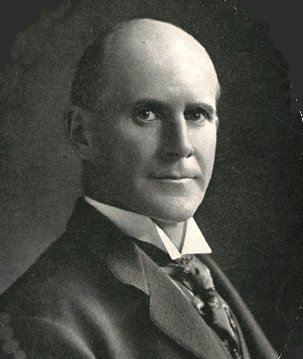
-- Eugene Debs, Labor Leader and Socialist Party Presidential Candidate
Saturday, April 08, 2006
Another Kick in the teeth by Republicans
Feds announce Part D cost increases for 2007
The Center for Medicare & Medicaid Services (CMS) has announced the
increased costs for the Standard Part D parameters that will take effect in
January 2007.
2007 will see the following changes:
* Deductible will go up from $250 to $265.
* Beginning of coverage gap ("donut hole") will go up from $2,250 to $2,400
in total drug cost.
* End of coverage gap ("donut hole") will go up from $5,100 to $5,451.25.
The amount of money a Medicare recipient will have to spend out of their own
pocket on drugs to get out of the coverage gap and begin receiving the 95%
"catastrophic" coverage will go up from $3,600 to $3,850 for the year.
The law requires CMS to increase the cost of the deductible and the
beginning/ending of the coverage gap each year based on the increase in drug
spending by Medicare beneficiaries in the previous year -- a rate much
higher than the Consumer Price Index. The new rates for 2007 are an
increase of 6.8%. The Consumer Price Index, which measures overall
inflation/price increases (and is used in determining Social Security and
other cost-of-living increases) for the same period will be only 1.81%
A real Medicare drug benefit is needed now!
Less than 4 months into the private Part D drug plan, it's official -- a bad
deal is going to get worse next year and every year after.
Recent studies have shown that compared to the cost of the private Part D
plan, a Medicare run drug benefit with negotiated lower drug prices could
provide 100% of recipients drug costs -- with no premium, deductible,
coverage gap -- and still have a surplus of $40 billion over the first 7
years.
It's time for Congress to fix this private Part D disaster and create a real
drug benefit run by and through Medicare with negotiated lower drug prices.
The Center for Medicare & Medicaid Services (CMS) has announced the
increased costs for the Standard Part D parameters that will take effect in
January 2007.
2007 will see the following changes:
* Deductible will go up from $250 to $265.
* Beginning of coverage gap ("donut hole") will go up from $2,250 to $2,400
in total drug cost.
* End of coverage gap ("donut hole") will go up from $5,100 to $5,451.25.
The amount of money a Medicare recipient will have to spend out of their own
pocket on drugs to get out of the coverage gap and begin receiving the 95%
"catastrophic" coverage will go up from $3,600 to $3,850 for the year.
The law requires CMS to increase the cost of the deductible and the
beginning/ending of the coverage gap each year based on the increase in drug
spending by Medicare beneficiaries in the previous year -- a rate much
higher than the Consumer Price Index. The new rates for 2007 are an
increase of 6.8%. The Consumer Price Index, which measures overall
inflation/price increases (and is used in determining Social Security and
other cost-of-living increases) for the same period will be only 1.81%
A real Medicare drug benefit is needed now!
Less than 4 months into the private Part D drug plan, it's official -- a bad
deal is going to get worse next year and every year after.
Recent studies have shown that compared to the cost of the private Part D
plan, a Medicare run drug benefit with negotiated lower drug prices could
provide 100% of recipients drug costs -- with no premium, deductible,
coverage gap -- and still have a surplus of $40 billion over the first 7
years.
It's time for Congress to fix this private Part D disaster and create a real
drug benefit run by and through Medicare with negotiated lower drug prices.
Saturday, April 01, 2006
Steelworkers Summer 2006
When I graduated from High School, I had no idea what I wanted to do with my life. After working at a summer resort in Iowa during the first few months, I decided to join the Navy. If I were to be in that predicament today, I’d consider the Steelworkers Summer Program.
Steelworkers’ Summer is an educational and training internship in which participants develop skills useful for union organizing by experiencing firsthand the kinds of struggles workers face while trying to win a voice at work. It is also designed to give participants an understanding and appreciation of the positive impact the union has had on their parents’ working lives.
Internships are open to young adults, 18 years of age or older. Selection preference is given to children of members of the United Steelworkers.
Steelworkers’ Summer is committed to uniting students, workers, and community activists to bring about social justice through workplace and community organizing.
Applicants should have a strong commitment to social and economic justice, as well as openness to working with a broad cross section of people. This includes people of various races, ethnicities, religions and orientations. Participants need to be people-oriented, enthusiastic, energetic, flexible and willing to work long hours on an unpredictable schedule. A college degree is not required. Previous union experience is not necessary. Volunteerism or activism is a plus.
You can find more information about this program as well as an application by going here.
I recommend it for any young person looking for an alternative way to begin a career in life.
Steelworkers’ Summer is an educational and training internship in which participants develop skills useful for union organizing by experiencing firsthand the kinds of struggles workers face while trying to win a voice at work. It is also designed to give participants an understanding and appreciation of the positive impact the union has had on their parents’ working lives.
Internships are open to young adults, 18 years of age or older. Selection preference is given to children of members of the United Steelworkers.
Steelworkers’ Summer is committed to uniting students, workers, and community activists to bring about social justice through workplace and community organizing.
Applicants should have a strong commitment to social and economic justice, as well as openness to working with a broad cross section of people. This includes people of various races, ethnicities, religions and orientations. Participants need to be people-oriented, enthusiastic, energetic, flexible and willing to work long hours on an unpredictable schedule. A college degree is not required. Previous union experience is not necessary. Volunteerism or activism is a plus.
You can find more information about this program as well as an application by going here.
I recommend it for any young person looking for an alternative way to begin a career in life.
Monday, March 27, 2006
Immigration Reform

By LINDA CHAVEZ-THOMPSON
Sunday, March 26th, 2006
They are Latin American immigrants tending the manicured lawns in wealthy New York neighborhoods. They are Indian computer programmers working for major corporations. They are women, born in Mexico and Africa, who tend our children. They pay taxes and have been contributing members of our communities for years. Many have families. We rely on their labor each and every day. Yet the basic rights of these workers - to a minimum wage, a safe workplace and fair treatment - are routinely trampled upon. This exploitation hurts all of us, foreign and native-born alike. It must end, and the overhauling of our nation's broken immigration laws is essential to achieving this goal.
Tragically, all immigration reform proposals currently circulating in the halls of Congress fail to protect even the most basic rights of immigrant workers and their families. Just last week, Senate Majority Leader Bill Frist (R-Tenn.) put forth his own makeshift proposal - topping the list of legislative failures. He wants to criminalize immigrant workers, deepening the potential for abuse and exploitation while undermining wages and labor protections for all.
To achieve comprehensive immigration reform, we have to give up the illusion that enforcement of laws alone can fix our broken system. Effective reform must include three interdependent goals. First, our government must uniformly enforce laws on workplace standards. All workers, including immigrants, should earn a minimum wage, have safe jobs and receive fair treatment. When immigrants are treated poorly, workplace standards are dragged down for all workers. Second, we must reject guest worker programs. Because these workers are wholly dependent on host employers for both their livelihoods and legal status, guest workers are ripe for exploitation. Finally, there must be a path to permanent residency for immigrant workers already here.
Undocumented workers are under constant threat of deportation, and employers cheat them out of due wages. They work the most dangerous jobs - among foreign-born workers, workplace fatality has increased by an alarming 46% between 1992 and 2002. When immigrant workers try to correct these injustices by forming unions, they are harassed, intimidated and terminated. When all else fails to break a union drive, employers simply call in the immigration authorities and everyone gets deported for standing up for basic rights.
Criminalizing undocumented workers makes them easy prey for unscrupulous employers. That in turn drives down working standards for all Americans and creates an undemocratic, two-tiered society.
We need an immigration policy that provides a real path to citizenship for those workers already here and that helps meet the future needs of workers in a fair way. We should recognize immigrant workers as full members of society - permanent residents with full rights that employers may not exploit.
As a nation that prides itself on fair treatment and equality, we simply cannot settle for anything less.
Chavez-Thompson is executive vice president of AFL-CIO.
Saturday, March 18, 2006
Steelworkers to Rally

The Fox government in Mexico has replaced Napoleon Gomez Urrutia as president of Los Mineros, the National Miners and Metallurgical Union. The Steelworkers Union has labeled Fox's actions "naked aggression" and demanded that he immediately reinstate Gomez and restore his personal assets and those of the union, all of which were frozen by the government.
"The USW views your actions as naked aggression against Los Mineros," Steelworkers President Leo W. Gerard wrote in a letter to Mexican President Vincentc Fox. The letter condemned the Mexican government's actions as "a blatant attempt to stifle the voice of workers and all progressive unions in Mexico," coming as they have a short time before the Mexican elections.
Gomez has been a leading voice in opposing changes to Mexican law sought by the Fox regime that would outlaw strikes. He has rallied support among independent unions in opposition to the legislation and is one of a growing number of Mexican leaders openly condemning the negative impacts of NAFTA and so-called free trade policies.
The government's action came on the heels of a strike by Los Mineros in protest to the decision of the Mexican government to seal the mine owned by Grupo Mexico and prematurely end the rescue efforts to reach 65 miners trapped as a result of a Feb. 19 underground gas explosion.
"These actions by Fox's government make a mockery of Mexican `democracy,"' Gerard said in making public his Executive Board's resolution. "This kind of blatant suppression of free trade unionism rips away what little pretense remains that the Fox regime is anything but thugs in three piece suits."
The Steelworkers and Los Mineros signed a strategic alliance last April, in which they committed to defend the human rights of each other's members. In fact, Gomez led hundreds of his members in a protest in Mexico City last year on behalf of Steelworkers in the U.S. who had been forced out on strike by Asarco, a mining company owned by Grupo Mexico.
Rally at the
Indianapolis
Mexican
Consulate
We will gather at the Pan Am Plaza located at South
Capital and Georgia St.
Monday March 27
11:30 am
For more information contact Sal
or Brett at the United Steelworkers
1-800-932-8007
Indianapolis
Mexican
Consulate
We will gather at the Pan Am Plaza located at South
Capital and Georgia St.
Monday March 27
11:30 am
For more information contact Sal
or Brett at the United Steelworkers
1-800-932-8007
Thursday, March 16, 2006
Republican boot lickers
Indiana’s Governor, Mitch Daniels and his boot licker legislators in the General Assembly have gone against the wishes of Hoosiers by leasing the Indiana Toll Road to a foreign company for 75 years. As I understand it, only the Democrats chose to follow the peoples wishes.
There’s only one way to deal with scoundrels like that…..make sure they get booted out of office at the first opportunity.
There’s only one way to deal with scoundrels like that…..make sure they get booted out of office at the first opportunity.
Saturday, March 11, 2006
Representatives are better than so called “leaders”
My Indiana State Representative, Steve Heim, has been posting links on his blog directing people to editorials which suggest that Indiana’s legislators should be “leaders” and go ahead and lease Indiana’s toll road, disregarding the fact that the people of Indiana don’t want this to happen.
That’s exactly how arrogant the politicians were in Michigan in regards to the minimum wage. Even though the people of Michigan wanted the minimum wage to be increased, the politicians thought that they knew what was best for the people and that they would be “leaders” and do what the hell they wanted.
Then, the folks in Michigan prepared to put the issue on this Fall’s ballot as a constitutional amendment to raise the minimum wage from the disgusting $5.15 per hour to $7.40 by June of 2008 in three incremental increases. The same thing is happening in Arizona.
Well, the Republican controlled Senate in Michigan started to feel the heat and knew that workers would boot their asses out this November if they didn’t do what the people wanted, so they voted unanimously to increase the minimum wage 44%.
Well, guess what the stinking minimum wage is in good old Indiana. Yep, a lousy $5.15 per hour. Indiana always does the minimum when it comes to workers. That’s exactly what “leaders” in congress do. And it hasn’t changed in nine long years. If I was working a job in Indiana which paid the minimum wage, I’d be packing my bags and moving to a more progressive state……like Michigan.
And while the minimum wage stays the same in Indiana, workers fall further and further behind. It's time for the so called “leaders” of Indiana begin to truly represent workers in our state and increase the minimum wage or face our boot in the next election. The same goes for the Indiana Toll Road.
And…if they refuse to do the will of the people, the people should fire them.
That’s exactly how arrogant the politicians were in Michigan in regards to the minimum wage. Even though the people of Michigan wanted the minimum wage to be increased, the politicians thought that they knew what was best for the people and that they would be “leaders” and do what the hell they wanted.
Then, the folks in Michigan prepared to put the issue on this Fall’s ballot as a constitutional amendment to raise the minimum wage from the disgusting $5.15 per hour to $7.40 by June of 2008 in three incremental increases. The same thing is happening in Arizona.
Well, the Republican controlled Senate in Michigan started to feel the heat and knew that workers would boot their asses out this November if they didn’t do what the people wanted, so they voted unanimously to increase the minimum wage 44%.
Well, guess what the stinking minimum wage is in good old Indiana. Yep, a lousy $5.15 per hour. Indiana always does the minimum when it comes to workers. That’s exactly what “leaders” in congress do. And it hasn’t changed in nine long years. If I was working a job in Indiana which paid the minimum wage, I’d be packing my bags and moving to a more progressive state……like Michigan.
And while the minimum wage stays the same in Indiana, workers fall further and further behind. It's time for the so called “leaders” of Indiana begin to truly represent workers in our state and increase the minimum wage or face our boot in the next election. The same goes for the Indiana Toll Road.
And…if they refuse to do the will of the people, the people should fire them.
Thursday, March 09, 2006
United Steelworkers Union
 On Wednesday, March 1, 2006, The Steelworkers Union had their Installation of Officers and Members of their Executive Board.
Below is listed the members of the USW Executive Board:
Leo W. Gerard, International President
James D. English, International Secretary-Treasurer
Thomas M. Conway, International Vice President (Administration)
Fred Redmond, International Vice President (Human Affairs)
Ken Neumann, National Director for Canada
Richard “Dick” LaCosse, International Vice President
James E. “Jim” Pannell, Administrative Vice President
David McCall, Director, District 1
Jon Geenen, Director, District 2
Stephen Hunt, Director, District 3
Bill Pienta, Director, District 4
Michel Arsenault, Director, District 5
Wayne Fraser, Director, District 6
Jim Robinson, Director, District 7
Billy Thompson, Director, District 8
Connie Entrekin, Director, District 9
John DeFazio, Director, District 10
Robert Bratulich, Director, District 11
Terry Bonds, Director, District 12
Gary Beevers, Director, District 13
Ron Hoover, Executive Vice President (R/PIC)
James Dunn, Associate Secretary-Treasurer
Lewis Peacock, Vice President (Organizing)
James K. Phillips, Vice President at Large
Gerald Johnston, Co-Director, District 1
Gary B. Cook, Co-Director, District 4
William Gibbons, Co-Director, District 7
Robert Smith, Co-Director, District 8
Lloyd Walters, Co-Director, District 9
Donald Langham, Co-Director, District 9
Ken Test, Co-Director, District 10
Roger Heiser, Co-Director, District 12
They took the following Oath of Office:
“I,________________, do hereby sincerely pledge my honor to perform the duties of my office as prescribed by the Laws of the organization, and to bear true allegiance to the United Steelworkers. I will deliver to my successor in office all books and other property of this Union that may be in my possession at the close of my official term. All of this I solemnly promise, with full knowledge that to violate this pledge is to stamp me as a person devoid of principle and destitute of honor.”
Our Union
The USW is 1.2 million working and retired members throughout the United States and Canada, working together to improve our jobs; to build a better future for our families; and to promote fairness, justice and equality both on the job and in our societies.
Our union is a resource, an organization that helps us achieve those goals, a network made up of hundreds of thousands of workers just like you, united to face the challenge of an ever-changing workplace in a constantly changing world.
Our members work in just about every sector of the North American economy, from metals and mining and manufacturing, to health care and various services in both the public and private sectors. Together, we make our union one of the most diverse in the world.
Many Industries, One Strong Union
In the USW, diversity isn't some politically correct buzzword for the new millenium. It's a tradition as old as the union itself.
Established as the Steel Workers Organizing Committee (SWOC) in 1936 to coordinate the massive drive to organize the North American steel industry, our organization grew in just six years to become the United Steelworkers on May 22, 1942.
Within two years of its founding convention, the USW began to broaden its ranks, when the Aluminum Workers voted unanimously to join the Steelworkers on June 30, 1944. The USW wasn't just for Steelworkers any more.
The Aluminum Workers was only the first of ten unions to join the USW. Each brought a new wave of diversity to our union, eventually spreading Steelworkers through virtually every industry on the North American continent.
Source: Installation of Officers program booklet & the USW web site
Saturday, March 04, 2006
A Sneak Attack In The Dark of Night
Six minutes before the deadline for filing amendments to all bills this legislative session, Representative Cindy Noe (R-Indianapolis) introduced an amendment which would have turned Indiana into the 23rd Right to Work state. Debate on this amendment to change a statute which has stood unchallenged for fifty plus years in Indiana began at nearly eleven p.m. Reversal of this long-standing law in Indiana would have thrust our state backward to a day when workers had no collective voice in their workplaces or the statehouse, where workers earn substantially less money, work in harsher, more unsafe conditions, have less insurance, less public education, and more infant mortality.
The amendment was passionately debated, but was destined to fail. Its introduction and the vote was likely intended to attract campaign donations from large, out-of-state, anti-union corporations for the 2006 election cycle. As a movement, we need to be prepared to counter this influx of anti-union campaign funds with all of our energies – grassroots, get-out-the-vote, and funds of our own - this election cycle.
In the end, sixty-three percent of all Republicans voting on the amendment voted for this attack on working families. The amendment was defeated with the full support of the Democratic caucus and some fair-minded Republicans who joined in opposition to this attempt to turn back Indiana’s clock.
The vote record is below. Know how your representative voted on this strike at the heart of organized labor and the right of Hoosiers to work with dignity and democracy in their workplaces.
The following Indiana State Representatives voted against the workers of Indiana.
R Robert W. Behning
R Matt Bell
R Randy L. Borror
R William E. Bright
R Tim Brown
R Woody Burton
R Bill Davis
R Richard (Dick) Dodge
R Jeffrey K. Espich
R Ralph M. Foley
R William C. Friend
R David Nason Frizzell
R Eric A. Gutwein
R Timothy Harris
R Phillip D. Hinkle
R Robert A. Hoffman
R Dan Leonard
R L. Jack Lutz
R Luke Messer
R Tim Neese
R Cindy Noe
R Phyllis J. Pond
R Kathy Kreag Richardson
R Michael Allen Ripley
R William 'Bill' J. Ruppel
R Marlin Stutzman
R Jeffrey Thompson
R Gerald R. Torr
R P. Eric Turner
R Jacqueline Walorski Swihart
R David Alan Wolkins
The following Indiana State Representatives voted for the workers of Indiana:
D John C. Aguilera Jr
D Terri Jo Austin
D Dennis T. Avery
D Jeb Bardon
D B. Patrick Bauer
D Robert J. Bischoff
D Carlene Bottorff
D Charlie Brown
D Duane Cheney
D William C. Cochran
D William A. Crawford
D David L. 'Dave' Crooks
D John Day
D Jerry L. Denbo
D Mae Dickinson
D Chester F. Dobis
D Ryan Dvorak
D Craig R. Fry
D Benjamin (Ben) GiaQuinta
D Terry A. Goodin
D F. Dale Grubb
D Earl L. Harris
D George Philip Hoy
D Clyde Kersey
D Sheila Johnston Klinker
D Thomas S. Kromkowski
D Robert D. Kuzman
D Linda Lawson
D Edmund M. Mahern
D Carolene Mays
D Joe Micon
D David Orentlicher
D Dennie Oxley II
D Scott Pelath
D Phillip Pflum
D Matt Pierce
D Gregory W. Porter
D Scott Reske
D Paul J. Robertson
D Vernon G. Smith
D Dan Charles Stevenson
D Russell L. Stilwell
D Vanessa Summers
D Vern Tincher
D Dennis Tyler
D Trent Van Haaften
D Peggy Welch
R Ralph Donald Ayres
R Bruce Borders
R James Russell Buck
R Mary Kay Budak
R Lawrence Lee Buell
R Suzanne Crouch
R Cleo Duncan
R Eric Koch
R Don Lehe
R Richard W. McClain
R Michael B. Murphy
R Thomas E. Saunders
R John Smith
R Andy Thomas
R John Ulmer
R Matthew D. Whetstone
R Troy A. Woodruff
R David B. Yount
The following Indiana State Representative was excused from voting:
R Steven Heim
Note: Steve Heim is my own State Representative. I asked him how he would have voted had he had the chance. His response was as follows:
“As I mentioned to you before, I have not given the issue much thought since I don't sit on the labor committee or any other committee that deals with these types of issues. As with any issue, I am willing to listen to both sides before making a decision. Unfortunately, I was sick Tuesday and not present for any of the debate that took place, so I honestly can't tell you how I would have voted.
I can tell you that I prefer legislation implementing significant policy changes to go through the committee process rather than being enacted via second reading amendment on the floor of the House.”
I will attempt to help Representative Heim give the issue more thought.
The following Indiana State Representatives did not vote:
D Winfield C. Moses, Jr.
R Brian Bosma
R Robert Cherry
The amendment was passionately debated, but was destined to fail. Its introduction and the vote was likely intended to attract campaign donations from large, out-of-state, anti-union corporations for the 2006 election cycle. As a movement, we need to be prepared to counter this influx of anti-union campaign funds with all of our energies – grassroots, get-out-the-vote, and funds of our own - this election cycle.
In the end, sixty-three percent of all Republicans voting on the amendment voted for this attack on working families. The amendment was defeated with the full support of the Democratic caucus and some fair-minded Republicans who joined in opposition to this attempt to turn back Indiana’s clock.
The vote record is below. Know how your representative voted on this strike at the heart of organized labor and the right of Hoosiers to work with dignity and democracy in their workplaces.
The following Indiana State Representatives voted against the workers of Indiana.
R Robert W. Behning
R Matt Bell
R Randy L. Borror
R William E. Bright
R Tim Brown
R Woody Burton
R Bill Davis
R Richard (Dick) Dodge
R Jeffrey K. Espich
R Ralph M. Foley
R William C. Friend
R David Nason Frizzell
R Eric A. Gutwein
R Timothy Harris
R Phillip D. Hinkle
R Robert A. Hoffman
R Dan Leonard
R L. Jack Lutz
R Luke Messer
R Tim Neese
R Cindy Noe
R Phyllis J. Pond
R Kathy Kreag Richardson
R Michael Allen Ripley
R William 'Bill' J. Ruppel
R Marlin Stutzman
R Jeffrey Thompson
R Gerald R. Torr
R P. Eric Turner
R Jacqueline Walorski Swihart
R David Alan Wolkins
The following Indiana State Representatives voted for the workers of Indiana:
D John C. Aguilera Jr
D Terri Jo Austin
D Dennis T. Avery
D Jeb Bardon
D B. Patrick Bauer
D Robert J. Bischoff
D Carlene Bottorff
D Charlie Brown
D Duane Cheney
D William C. Cochran
D William A. Crawford
D David L. 'Dave' Crooks
D John Day
D Jerry L. Denbo
D Mae Dickinson
D Chester F. Dobis
D Ryan Dvorak
D Craig R. Fry
D Benjamin (Ben) GiaQuinta
D Terry A. Goodin
D F. Dale Grubb
D Earl L. Harris
D George Philip Hoy
D Clyde Kersey
D Sheila Johnston Klinker
D Thomas S. Kromkowski
D Robert D. Kuzman
D Linda Lawson
D Edmund M. Mahern
D Carolene Mays
D Joe Micon
D David Orentlicher
D Dennie Oxley II
D Scott Pelath
D Phillip Pflum
D Matt Pierce
D Gregory W. Porter
D Scott Reske
D Paul J. Robertson
D Vernon G. Smith
D Dan Charles Stevenson
D Russell L. Stilwell
D Vanessa Summers
D Vern Tincher
D Dennis Tyler
D Trent Van Haaften
D Peggy Welch
R Ralph Donald Ayres
R Bruce Borders
R James Russell Buck
R Mary Kay Budak
R Lawrence Lee Buell
R Suzanne Crouch
R Cleo Duncan
R Eric Koch
R Don Lehe
R Richard W. McClain
R Michael B. Murphy
R Thomas E. Saunders
R John Smith
R Andy Thomas
R John Ulmer
R Matthew D. Whetstone
R Troy A. Woodruff
R David B. Yount
The following Indiana State Representative was excused from voting:
R Steven Heim
Note: Steve Heim is my own State Representative. I asked him how he would have voted had he had the chance. His response was as follows:
“As I mentioned to you before, I have not given the issue much thought since I don't sit on the labor committee or any other committee that deals with these types of issues. As with any issue, I am willing to listen to both sides before making a decision. Unfortunately, I was sick Tuesday and not present for any of the debate that took place, so I honestly can't tell you how I would have voted.
I can tell you that I prefer legislation implementing significant policy changes to go through the committee process rather than being enacted via second reading amendment on the floor of the House.”
I will attempt to help Representative Heim give the issue more thought.
The following Indiana State Representatives did not vote:
D Winfield C. Moses, Jr.
R Brian Bosma
R Robert Cherry
Thursday, February 23, 2006
An Independent Voice in Congress

“In this election, we will bring sweeping change to the United States Congress in our country. The time has come to end the corruption and cronyism that is rampant in Washington. It is time for our government to stand up again for the middle class and for working families.__In Congress, I will put the needs of the people in our District first and foremost. We are not just Democrats or Republicans. We are Hoosiers with a common interest in making our country a better place, and creating a brighter future for our children.__I invite you to become part of our campaign team and help make the difference in this election. Your volunteer assistance, whether a few minutes or a few days a week, can help change Indiana's future. I look forward to meeting you during the campaign. Together, we can change Washington and build a better world.__I hope to see you soon.”
Joe Donnelly
Source: Joe Donnelly Website
Note: Joe is a candidate in Indiana's 2nd Congressional District.
Tuesday, February 21, 2006
The Costs of War
In Money
$3.8 billion in taxes from Indiana—and counting.
For this amount of money we could have provided care for the estimated 862,000 Indiana residents (14%) without health insurance and assistance to over 600,000 Hoosiers (10+%) living in poverty. What did we get instead? $164.9 million in cuts to Indiana state and local budgets.
In Lives Lost and Disrupted
2,340 Indiana reservists are currently serving in Iraq; 55 have died and 330 have been wounded.
Last year the surgeon general of the U.S. Army reported that 30% of U.S. troops develop mental health problems within 3-4 months of returning from Iraq.
The Results
Over 30,000 Iraqi and Afghani civilians have been killed, many more wounded, and both countries are in chaos. The White House is “scaling back ambitions to rebuild” in favor of ever more money for military operations. While we pay for all this, Bush and Cheney cronies reap fat profits from no-bid contracts to companies such as Halliburton.
And what have we gained?
Our country shamed in front of the whole world for the pornographically relished torture and abuse of ‘terrorist’ suspects, many of them later declared innocent.
Security for Americans? Well Al Quaeda wasn’t in Iraq before the war, but it sure is now. Meanwhile, Our civil liberties are being eroded daily in the name of the War on Terror.
Benefits? None! Cost? Huge! Bring the troops home now!
(Sources: U.S. Census Bureau;
www.insideindianabusiness.com;
www.nationalpriorites.org;
www.iraqbodycount.net; Guardian/UK)
What does war look like?
"Like the backside of a baboon. When the baboon is up in a tree, with its hind end facing us, there is the face of war exactly: scarlet, scaly, glazed, framed in a clotted, filthy wig." Hecuba
$3.8 billion in taxes from Indiana—and counting.
For this amount of money we could have provided care for the estimated 862,000 Indiana residents (14%) without health insurance and assistance to over 600,000 Hoosiers (10+%) living in poverty. What did we get instead? $164.9 million in cuts to Indiana state and local budgets.
In Lives Lost and Disrupted
2,340 Indiana reservists are currently serving in Iraq; 55 have died and 330 have been wounded.
Last year the surgeon general of the U.S. Army reported that 30% of U.S. troops develop mental health problems within 3-4 months of returning from Iraq.
The Results
Over 30,000 Iraqi and Afghani civilians have been killed, many more wounded, and both countries are in chaos. The White House is “scaling back ambitions to rebuild” in favor of ever more money for military operations. While we pay for all this, Bush and Cheney cronies reap fat profits from no-bid contracts to companies such as Halliburton.
And what have we gained?
Our country shamed in front of the whole world for the pornographically relished torture and abuse of ‘terrorist’ suspects, many of them later declared innocent.
Security for Americans? Well Al Quaeda wasn’t in Iraq before the war, but it sure is now. Meanwhile, Our civil liberties are being eroded daily in the name of the War on Terror.
Benefits? None! Cost? Huge! Bring the troops home now!
(Sources: U.S. Census Bureau;
www.insideindianabusiness.com;
www.nationalpriorites.org;
www.iraqbodycount.net; Guardian/UK)
What does war look like?
"Like the backside of a baboon. When the baboon is up in a tree, with its hind end facing us, there is the face of war exactly: scarlet, scaly, glazed, framed in a clotted, filthy wig." Hecuba
Saturday, February 18, 2006
Politicians Say "Let Workers Eat Cake" On Pensions
CNNMoney has published a great column today about how politicians regurgitating right-wing talking points about how American workers should just get used to massive pension cuts have no problem taking such a hard line because their pensions are lavish and guaranteed. As he says, "In the coming months, when you hear various elected officials bemoan the state of pensions and the need for reform [aka. cuts] keep this in mind: They got theirs and it isn't going away ... that would take an act of Congress." You may recall that legislation was offered in 2003 to force Congress to convert its pension plan to the same kind of "cash balance" pension rip-off scheme politicians and the Bush administration was trying to legalize. The result of that debate was simultaneously hilarious and sad.
New Steelworkers SOAR Podcast available.
New Steelworkers SOAR Podcast available.
Thursday, February 16, 2006
Photos at Podcast Page
You'll notice that at the top of the Steelworkers SOAR podcast, you will see a link to a photo album. I just put it on yesterday with the intension of simply seeing what the results would look like. The photos on there now were randomly selected. I'll try to change them about once per week.
The "hit counter" at the bottom of each page is deceiving. Most of the “hits” would understandably be on the first page. Then, many people will “subscribe” and download the rest of the “casts” by the use of iTunes or whatever other suitable program they’re using. I continue to push the iTunes program which is a free program and good with your computer. After downloading iTunes, you can simply click on the Music Bookstore, then select podcasts, then search for the word, steelworkers, or soar, or steelworkers soar. The result will give you an opportunity to "subscribe". Once you subscibe, all of the "casts" will be downloaded to your itunes program
The "hit counter" at the bottom of each page is deceiving. Most of the “hits” would understandably be on the first page. Then, many people will “subscribe” and download the rest of the “casts” by the use of iTunes or whatever other suitable program they’re using. I continue to push the iTunes program which is a free program and good with your computer. After downloading iTunes, you can simply click on the Music Bookstore, then select podcasts, then search for the word, steelworkers, or soar, or steelworkers soar. The result will give you an opportunity to "subscribe". Once you subscibe, all of the "casts" will be downloaded to your itunes program
Subscribe to:
Posts (Atom)
-
 January 1, 2009 By Michael Goodson Post-Tribune columnist For the past several months, we have listened to right-wing pundits trying to rewr...
 -
Splice The Main Brace A sailing ship's main brace is a rope attached to its main spar. Splicing it (making a connection in it by interw...

